dancing with gravity – a love supreme by Keersmaeker / Sanchis
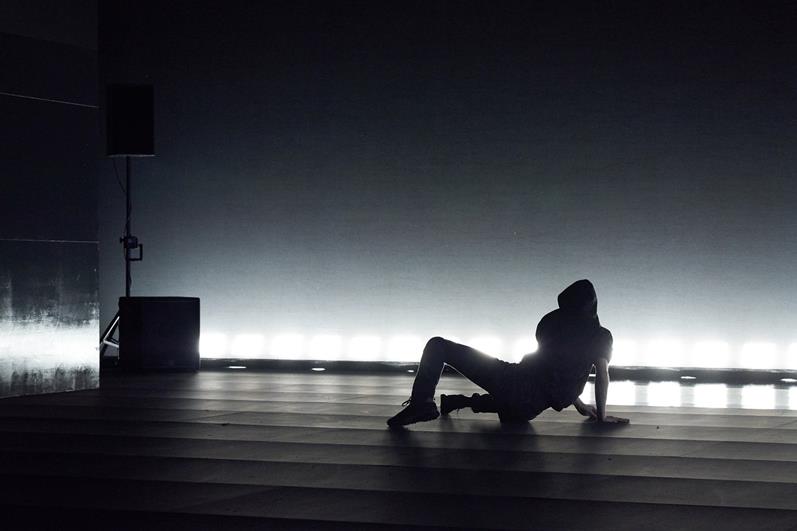
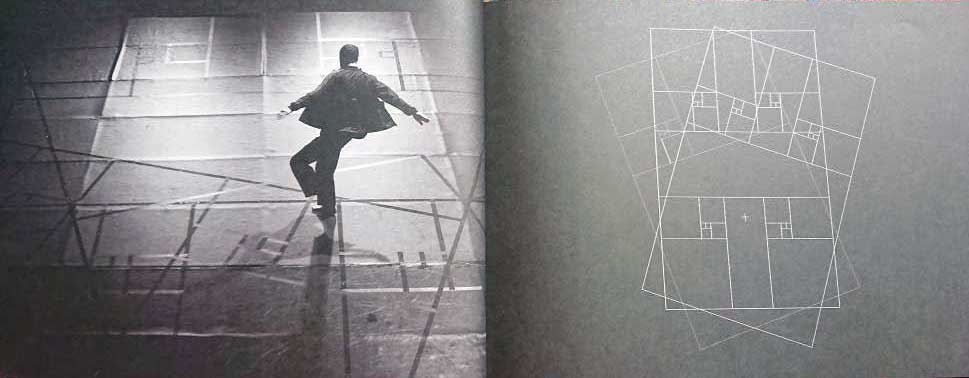
“You can’t dance beyond gravity, but you can relate to it. You can consider it not only as something that limits us but also as something that defines us. You can dance with it …” (Keersmaeker in the accompanying book of A Love Supreme, 2019 or in slightly different wording here) The ticket, a gift […] Read More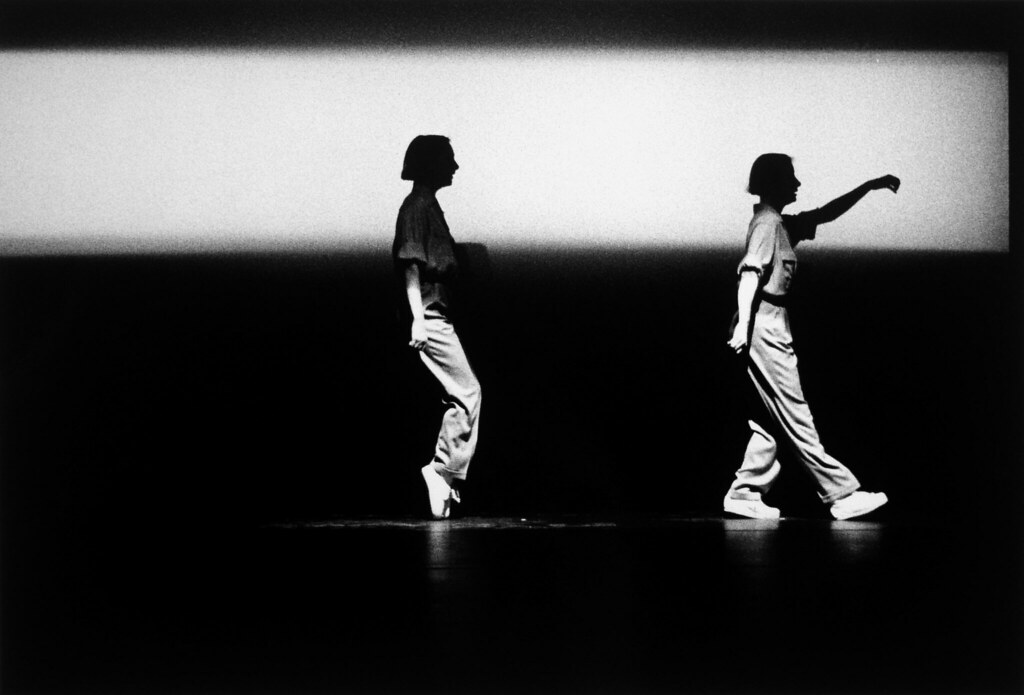
What the Body Remembers. Dance Heritage Today
Berlin in August is already blessed with its annual festival ‘Tanz im August‘, so this year it coincidences with the just opened show What the Body Remembers. Dance Heritage Today at the AdK in the Hansaviertel. It brings together an exhibition with performances and discourse conceived to review a ‘century of dance’. Enough material to […] Read More
interpassivity – appifying interaction
Barely have I redirected here to other articles in full length – yet reading Svitlana Matviyenko’s article “Interpassive User: Complicity and the Returns of Cybernetics” in The Fiberculture Journal provided such insight through its interweaving of strands of thought. Her article incites reading as a pleasure, by displaying a choreography in entangled thinking that acts […] Read More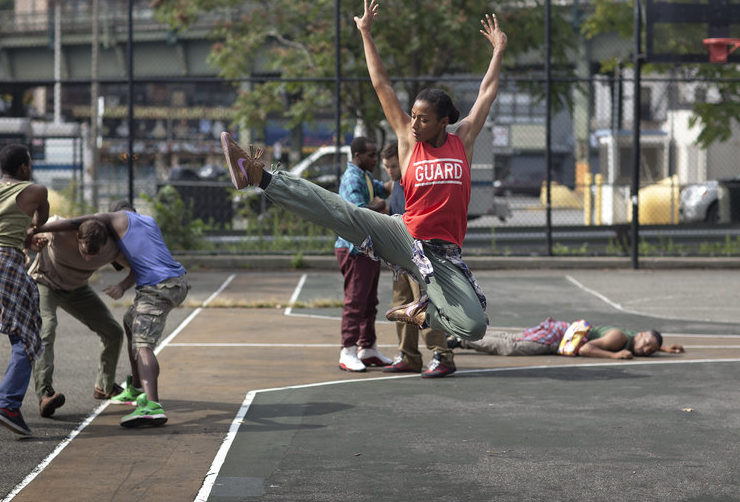
Pavement
UPDATE 20.Nov: See here for a review in the Guardian. A.I.M.’s piece Pavement is a gem, a real ‘must see’, in interdisciplinary choreography. While I was visiting with little more pre-information than that I liked the posters of street dance I was surprised by the layering of it with classical elements. The dance clearly starts […] Read More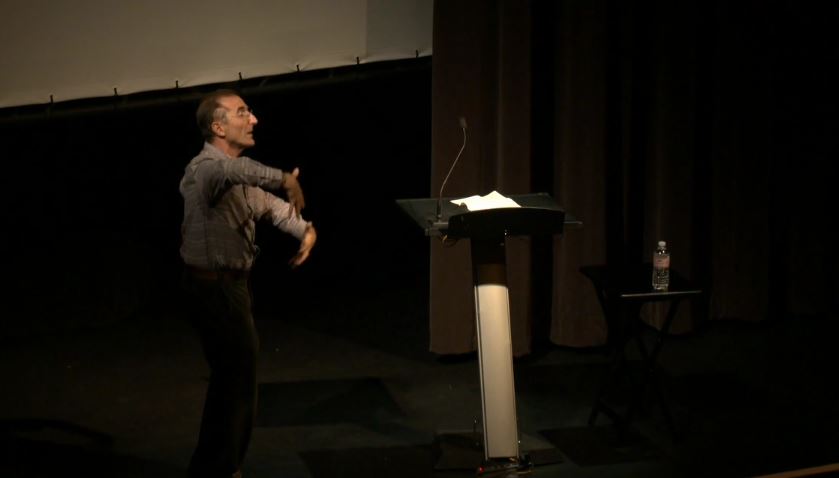
Dance and Finance—Social Kinesthetics and Derivative Logics
UPDATE 04/2017: In an interesting essay Mckenzie Wark examines the work of Randy Martin mainly focusing on Martin’s Knowledge LTD: Towards a Social Logic of the Derivative (2015). Wark shows how Martin’s reading of postmodern dance and his understanding of social kinesthetics illuminate our current political-economic situation better than traditional commodity-based Marxist theories, as pointed […] Read More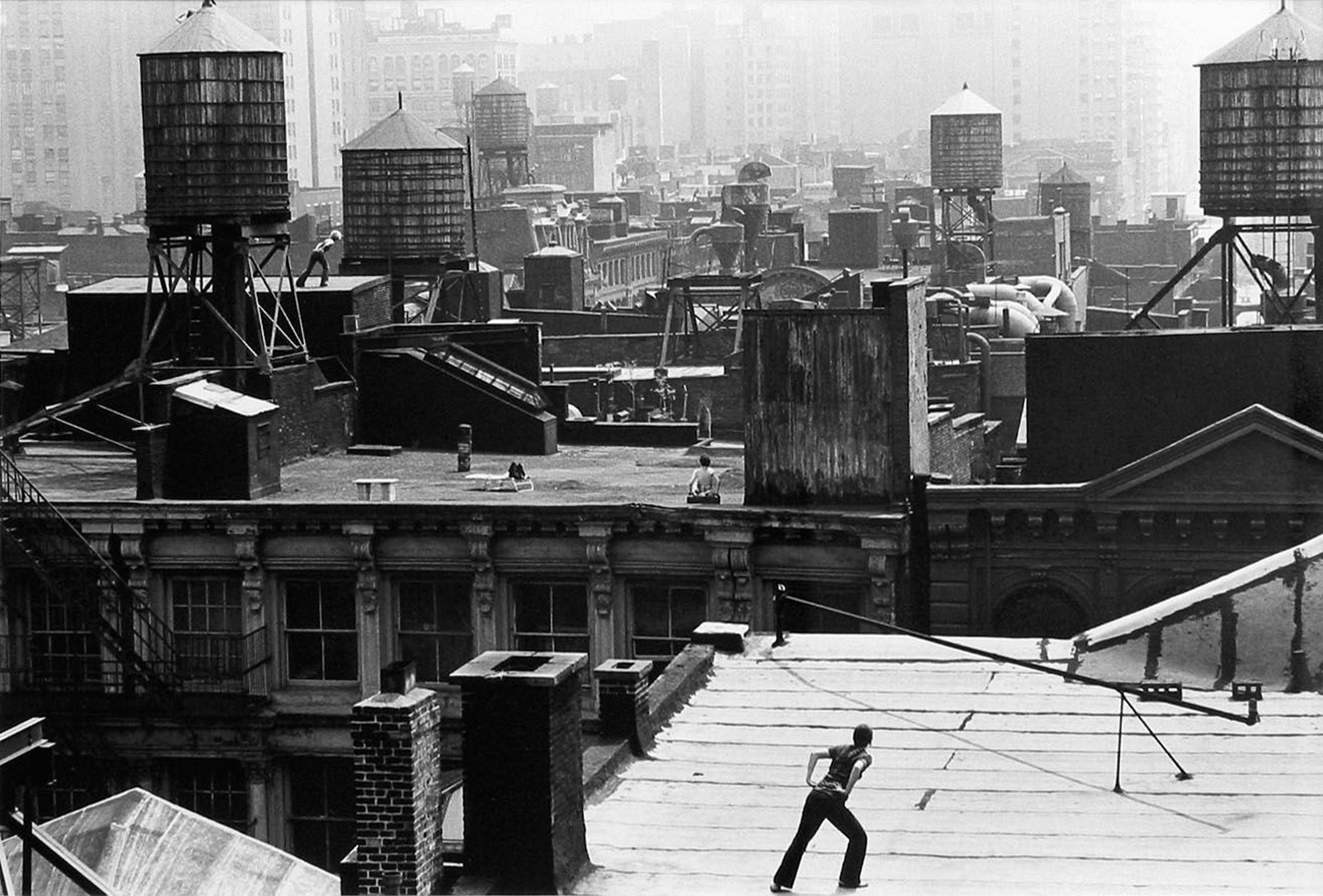
Trisha Brown
Trisha Brown – amazing and iconic figure in the arts, dance and explorer of movement died four days ago. NYT obituary – and just found: a detailed description especially on her early work in The Guardian together with a video of re-enactment of some of these works. And a good explanation for what her work […] Read More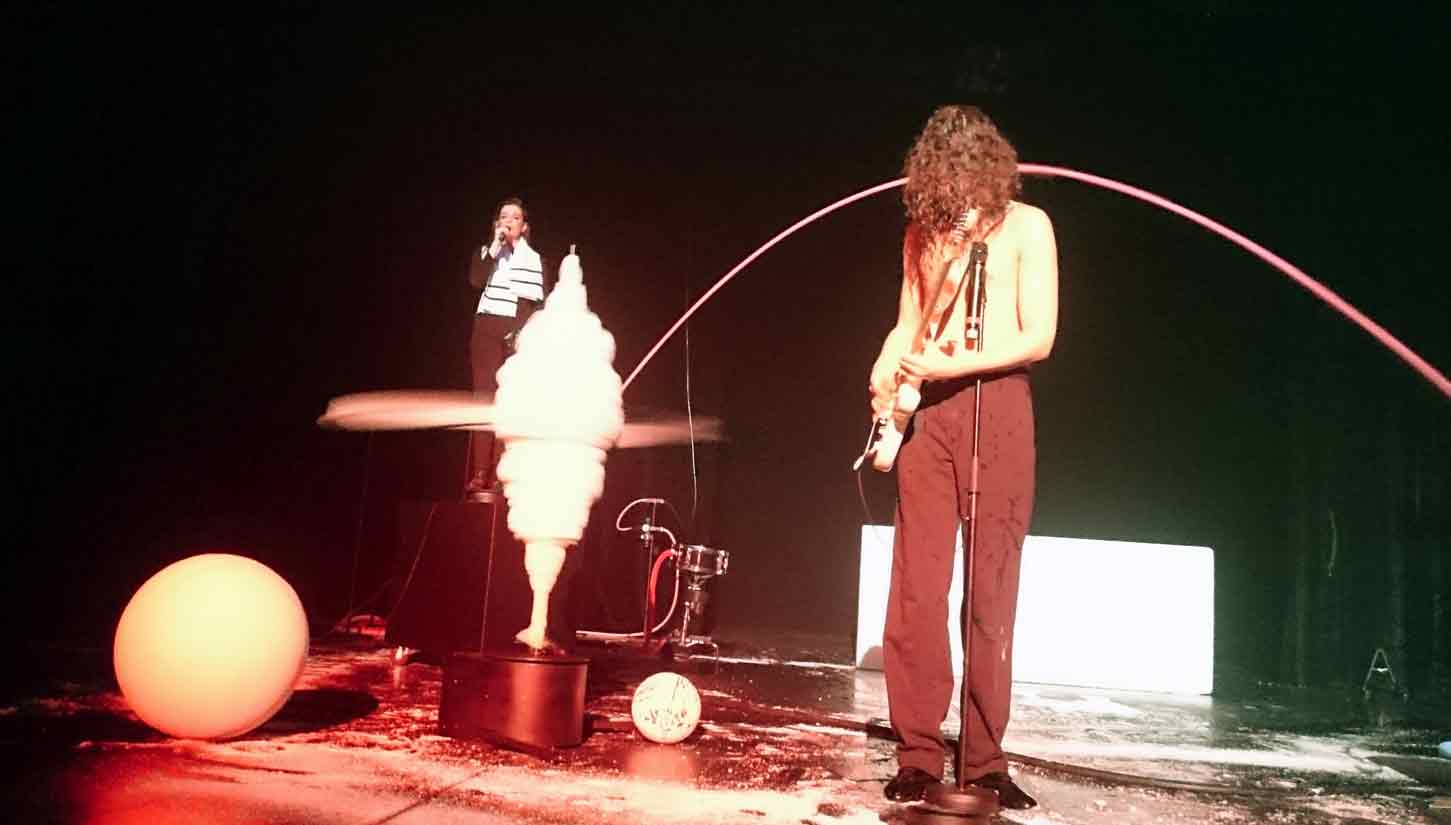
.. and yet things moves …
.. hot wax, plaster, some white powder, colored water and presumably a lot of air not only to breathe, but to activate the instruments, were the main ingredients of Miet Warlop’s rock spectacle (or opera?) “Fruits of Labor”. There is glitter, 60s look and 70s hairstyle wigs, there is guitar play, bass and drumming, Jesus […] Read More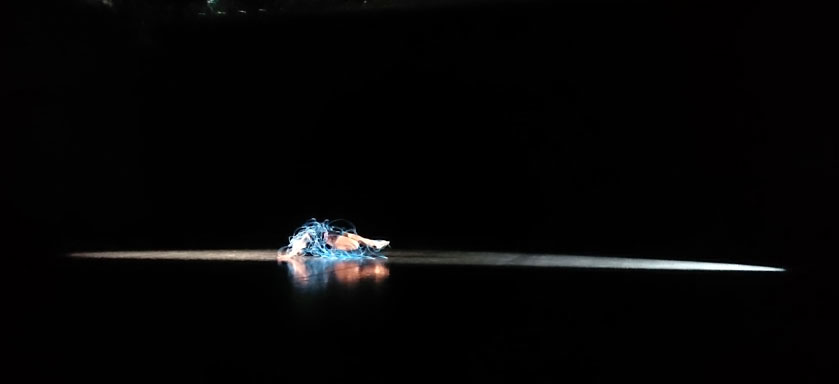
The Thing and the body
… or the difference between entanglement and entrapment. It starts with a blue lit up mesh ball, first just sitting there, then softly animated through the movement of a breathing body. This thing seems to be even livelier than the laying figure of the dancer below it. Everything is black, the floor, the surrounding and […] Read More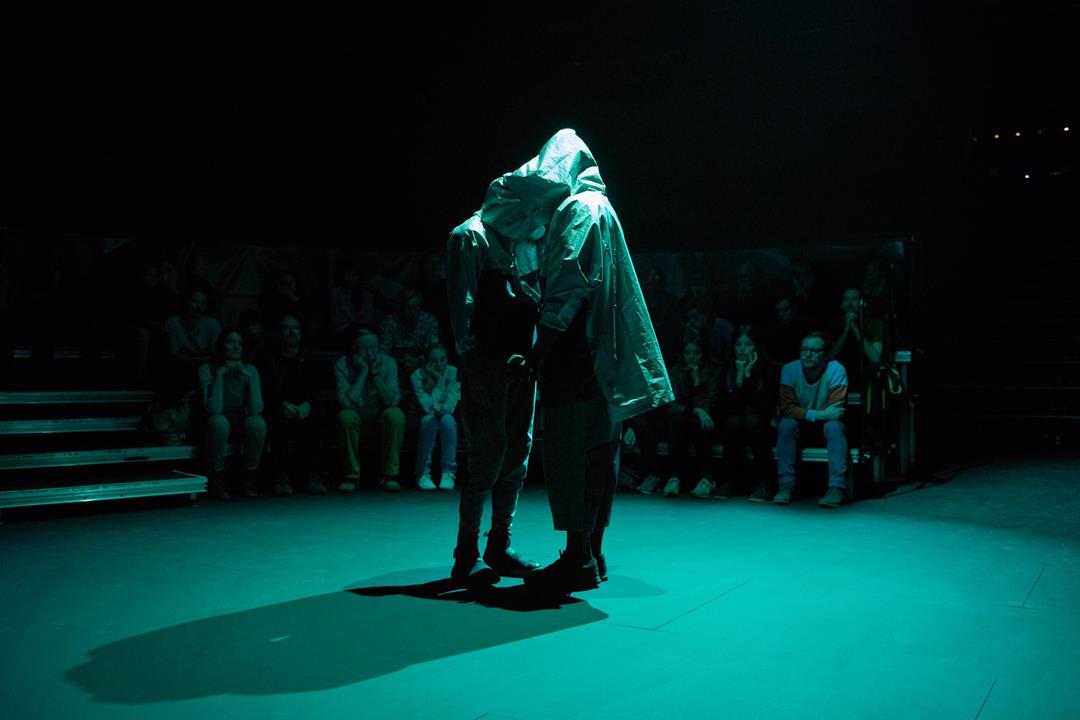
The battle that does not need to be won …
HAU 2, 3.12.2016 A composition of pieces and elements could also be described what Ian Kaler presents as the third part of the o.T. series, this time subtitled (incipient futures). Though in this case, rather than fostering the sensation of a linear development the parts appear interwoven, and brought to life based on a complex […] Read More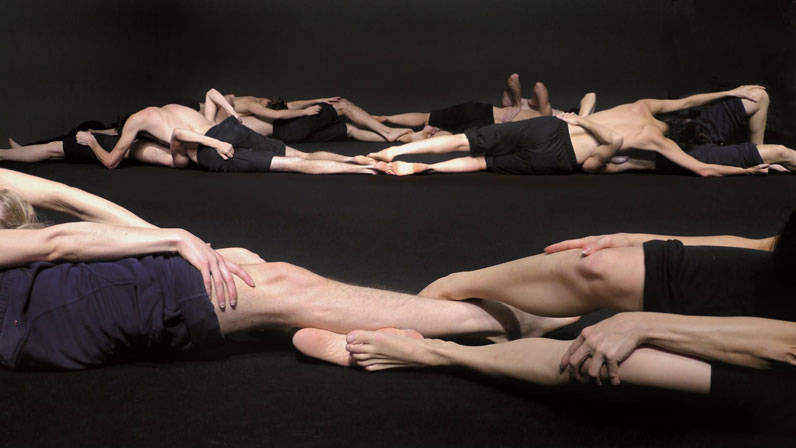
Pieces and Elements
“We are approaching an oscillation between organism, apparatus, sensuality and hybrid matter.†from the invitation card for the dance piece Pieces and Elements by Isabelle Schad at the HAU Berlin, 28.11.2016 On entering the HAU 2, a medium sized black box theater with about 15 rows of cascading seating, an slightly elevated area covering most […] Read More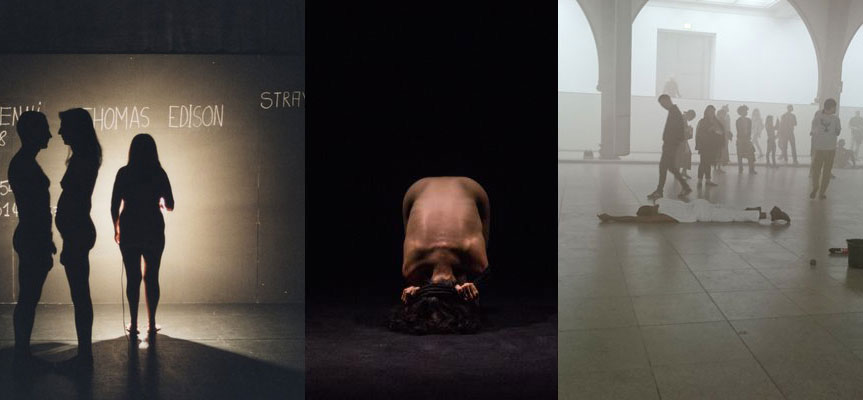
Body and Time: Jerome Bel, Isabelle Schad and Anne Imhof
This selection is not as arbitrary as just providing a collection of pieces I saw recently. Though certainly that I have not written here in long contributes to bringing these three works together in one longer post, instead of three. It not only manifests a sort of catching up, but a different approach towards the […] Read More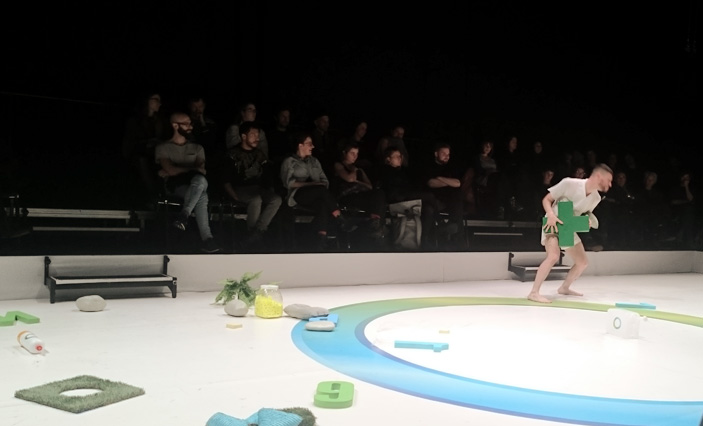
Drawn into DrawnOnward
Concepted by Jeremy Wade DrawnOnward is a collaboration with the choreographer Juli Reinartz, musician and co-performer Marc Lohr, writer John-Erik Jordan, costume designer Grzegorz Matlag and dramaturge Maximilian Haas. Or according to the acceleration from the leaflet: DrawnOnward is a possibility engine, an everything you need kind of machine. Drawn- Onward is a process of […] Read More